.png)
How to Style a Banarasi Saree: Jewellery, Blouses, and Draping That Let the Weave Speak
Updated: 3 days ago
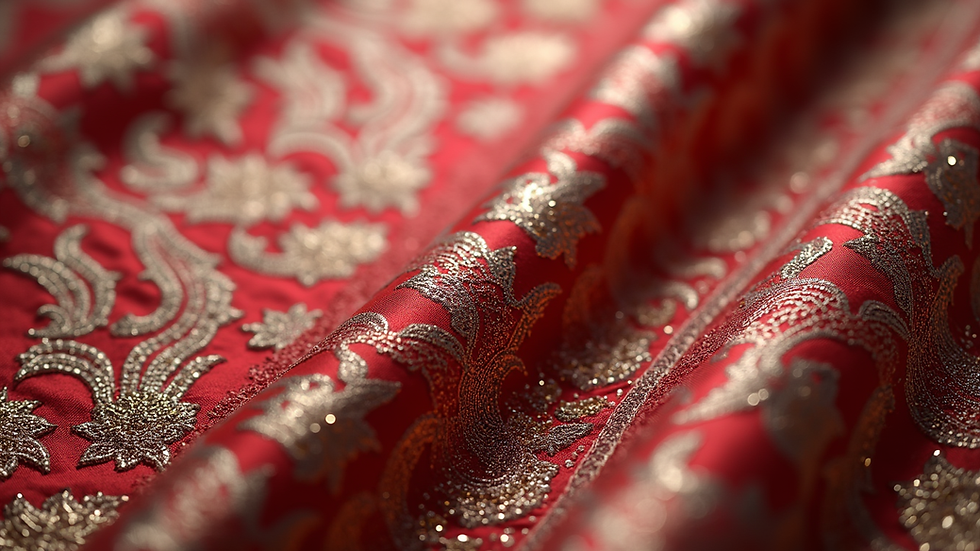
A Banarasi saree does most of the work for you. The zari catches light before you enter the room; the pallu settles into folds that took a weaver weeks to imagine. Styling one, then, is less about adding and more about choosing — deciding what deserves to sit beside the weave and what should quietly step aside.
This guide covers the four decisions that shape a Banarasi look: jewellery, blouse, drape, and everything underneath and around it.
Start With the Saree, Not the Occasion
Before reaching for jewellery, read your saree. A Banarasi with dense all-over buta and a grand floral pallu — the kind woven for weddings — is already ornamented. It asks for restraint everywhere else. A lighter weave, like a Kota cotton with scattered buti or an open border, leaves room for bolder accessories.
A useful rule: the more the saree says, the less everything else should.
Jewellery: What to Wear With a Banarasi Saree
Gold is the traditional companion of Banarasi zari, and for good reason — real zari was historically wound with gold and silver, so gold jewellery continues the metal story the weave began.
For weddings and bridal functions: Antique gold or kundan sits most naturally against Sona Rupa (gold and silver) zari. A statement necklace — a kundan choker or a temple-style haar — paired with matching jhumkas is complete in itself. If the saree's pallu is grand, skip the heavy necklace and let jhumkas and a maang tikka carry the look instead.
For receptions and evening events: Diamonds and polki bring a cooler shine that flatters silver-leaning zari beautifully. One significant piece — earrings or necklace, not both at full volume — keeps the look modern.
For festive daywear and lighter weaves: Pearls, small gold studs, or a single kada. Kota and cotton Banarasi weaves pair especially well with understated silver or oxidised pieces if the palette is cool.
What to avoid: Competing metals. If your zari is gold-dominant, silver-toned jewellery will argue with it all evening.
The Blouse: Match, Contrast, or Borrow From the Border
Most USAYA sarees include a matching running blouse piece with a woven zari border — the safest and most classical route. Beyond that, three approaches work reliably:
Match the body. A blouse in the saree's base colour creates one long, elegant line. Best for saturated hues — reds, royal blues, deep greens — where the colour itself is the statement.
Contrast deliberately. Pick a colour from inside the weave — the mina of the buti, the second tone of a contrast border — rather than an unrelated shade. A black saree with a rani pink contrast border, for instance, earns a rani blouse.
Borrow the zari. A gold tissue or brocade blouse turns the border's metal into the blouse fabric itself. Reserve this for evenings; in daylight it can overwhelm.
On necklines: Banarasi sarees carry their weight on the shoulder and pallu, so keep blouse backs and sleeves clean — a boat neck, a deep U-back, or elbow sleeves with a thin zari edge. Heavy embroidery on the blouse fights the weave.
Draping: Let the Pallu Do What It Was Woven To Do
The pallu of a Banarasi saree is its signature — the densest, most ambitious section of the weave. Two drapes honour it:
The open pallu (seedha or ulta with pallu spread). Pleat the body, but leave the pallu open across the shoulder so the full woven panel is visible. This is the drape for weddings and photographs; it displays the pallu the way the weaver intended.
The pinned classic (Nivi with pleated pallu). Neat pleats pinned at the shoulder give structure and free your hands — practical for long ceremonies and hosting. The border still shows along every pleat edge.
For heavier silks, set your pleats slightly wider (six to seven instead of eight to nine narrow ones) so the fabric falls in soft columns rather than bunching. Raise the fall a half-inch higher than you would with chiffon — Banarasi silk holds its shape and will not cling.
Hair completes the drape. A classic low bun — with gajra for weddings — clears the neckline for jewellery and keeps the shoulder line clean. Soft curls left open work for receptions when the pallu is pinned.
Footwear, Bags, and the Finishing Layer
Heels with a modest platform keep the fall of the saree consistent through an evening — block heels over stilettos if you will be standing on lawns or uneven venue floors. Metallic gold or antique-toned sandals disappear gracefully under a zari border.
For the bag, a potli or a small box clutch in a tone picked from the weave. Nothing with a long strap; it crushes the pallu.
Three Complete Looks From the USAYA Collection
The bridal red. A red Sona Rupa buta Mashru silk saree, matching red blouse with zari-edge sleeves, kundan choker with jhumkas, low bun with gajra, antique gold sandals. Open pallu drape.
The evening navy. A navy blue Sona Rupa buta saree, gold tissue blouse, diamond solitaire studs and a slim polki bracelet, soft open curls, pinned pleated pallu.
The workday Kota. A german blue Kota checks buta cotton saree, contrast mustard blouse, small gold studs and a single kada, neat braid, flat kolhapuris. Pinned drape, pallu pleated slim.
Embracing the Essence of Banarasi Weaves
As I wrap myself in the luxurious folds of a Banarasi saree, I feel the artistry of the weavers whispering stories of tradition and craftsmanship. Each thread is a testament to their skill, a dance of heritage that transcends time. The intricate patterns and shimmering zari reflect not just beauty but a legacy that deserves to be cherished.
Choosing a Banarasi saree is not merely a fashion statement; it is an embrace of culture, a celebration of the hands that crafted it. I find joy in selecting the right jewellery, blouse, and drape, allowing the saree to shine while I complement its elegance.
In this journey of styling, I discover the delicate balance between tradition and modernity. The saree becomes a canvas, and I, the artist, painting my unique expression with every choice I make.
Let us revel in the beauty of Banarasi sarees, ensuring that their timeless artistry continues to inspire and enchant.
Explore the world of Banarasi sarees and discover the magic woven into each piece.


Comments